Musk Claims Suppliers Rushing Gear for Terafab as 2028 Chip Deadline Looms
SpaceX CEO asserts that critical equipment makers are fast-tracking deliveries to support a massive new Texas fabrication plant, despite significant technical hurdles.
By Ishani Kapalli ·
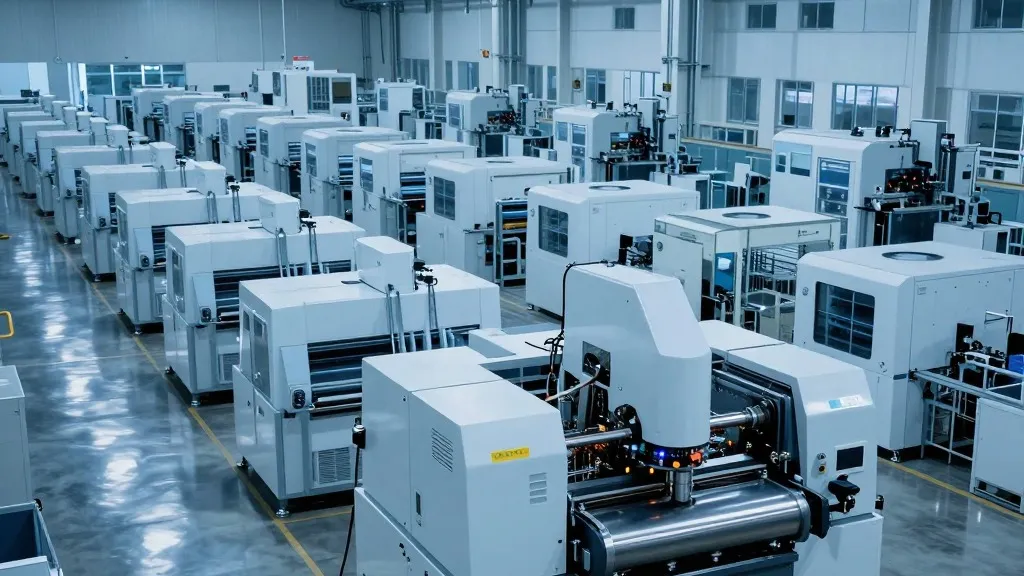
Elon Musk confirmed on Tuesday that major semiconductor equipment manufacturers are accelerating delivery schedules to support the Terafab initiative, a joint venture between Tesla and SpaceX. Speaking during a live broadcast of SpaceX’s Q3 2026 earnings call on X, Musk indicated that the company is targeting volume chip production at the project’s primary facility in Gibbons Creek, Texas, by the third or fourth quarter of 2028. While he described the schedule as "highly aspirational" with "big error bars," the announcement signals an aggressive push to bring cutting-edge manufacturing in-house.
The core claim rests on the cooperation of ASML, the world’s sole commercial supplier of extreme ultraviolet lithography systems essential for leading-edge chip production. Musk stated that the company is "very appreciative" of ASML and other suppliers for accelerating equipment deliveries. This support is critical for a facility that aims to fabricate logic, memory, and advanced packaging in a single location, utilizing Intel’s 14A manufacturing node technology. The goal is to produce one terawatt of AI computing power annually, a scale that would place the commercial value of the output within the top 20 global country GDPs, rivaling Switzerland’s economy of approximately $1.14 trillion.
Beyond the Texas super-fab, Musk outlined parallel ambitions for his AI enterprises. He expects 2.5 to 3 gigawatts of computing capacity to be active by the end of 2026, with high confidence in adding another 10 gigawatts in 2027. To achieve this, SpaceX and xAI are procuring next-generation NVIDIA hardware, including a 440,000-GPU Vera Rubin training cluster slated for online status by the end of Q2 2027. An experimental test chip is also planned for fabrication at SpaceX’s Austin research facility around Q2 2027.
The project relies on a complex web of international partnerships. Intel joined the venture in April 2026 to co-develop silicon fabrication technology. Other key suppliers include American firms Applied Materials, Lam Research, and KLA Corporation, alongside Japan’s Tokyo Electron. Additionally, Tesla and SpaceX are negotiating with roughly ten South Korean equipment makers, including Hanmi Semiconductor and HPSP, for specialized components. Unofficial sources suggest the first EUV tool was originally slated for mid-2027, though it remains unclear if this aligns with the new expedited timeline.
Caveats and open questions persist regarding the feasibility of these targets. The facility is designed to mitigate reliance on external foundries like TSMC by supplying chips for xAI clusters, self-driving vehicles, Optimus robots, and orbital data centers. However, experts have questioned the 1 terawatt ambition, noting that Gartner estimates total global AI-optimized data center capacity at roughly 44 gigawatts as of late 2026. This figure represents only 4.4% of Terafab’s planned output, raising doubts about whether the supply chain can scale sufficiently to meet Musk’s aggressive 2028 deadline.
Source: Tom's Hardware